Are Dishwashers Actually Sanitizing Your Dishes? What Research Really Says
• Introduction
• How Dishwashers Actually Work
• Heat, Temperature & Sanitization
• Biofilm & Hidden Contamination Risks
• When Dishwashers Sanitize — and When They Don’t
• Real-Life Example: Celebrity and Their Dishwasher Routine
• Practical Tips for Safer Dishwasher Use
• Recommended Tools (Amazon)
• FAQ
• Scientific References
Introduction
Dishwashers are marketed as powerful cleaning machines that not only wash your dishes but *sanitize* them. But what does that mean in real life? Does your dishwasher kill bacteria? Is it truly safe for cutting boards, baby bottles, knives, and containers?
Recent microbiological research shows that dishwashers can both **reduce microbial loads dramatically** and at the same time **harbor heat-resistant microorganisms** if not used correctly. This article breaks down what science actually says — and how you can use your dishwasher to keep your kitchen safer.
How Dishwashers Actually Work
Automatic dishwashers rely on four mechanisms:
- High-temperature water (120–160°F / 49–71°C)
- Detergent chemistry that breaks down fats & proteins
- Mechanical spray pressure
- Drying heat, which continues killing microbes
Most consumer dishwashers do not truly “sterilize,” but they do reach **sanitization-level** bacterial reduction. Commercial models reach even higher temperatures and are regulated under NSF standards.
Heat, Temperature & Sanitization
Research published in the Journal of Applied Microbiology confirms that bacteria begin to die rapidly above **60°C (140°F)** — particularly Salmonella, E. coli, and Listeria. Many dishwashers routinely reach or exceed this temperature during the wash and final rinse.
Biofilm & Hidden Contamination Risks
However, several microbiology teams have discovered **biofilm formation** inside dishwashers — especially on rubber seals and filters. Biofilms can include:
- Heat-resistant bacteria
- Fungi
- Yeasts
A study in Fungal Biology analyzed dishwashers from multiple countries and detected Exophiala and Candida species on gaskets that experience constant moisture and heat.
The risk appears when biofilms detach and spread onto dishes — especially if the dishwasher is overloaded or filters are dirty.
When Dishwashers Sanitize — and When They Don’t
Dishwashers DO sanitize when:
- You use the hottest cycle.
- The machine reaches above 60°C (140°F).
- The filter is clean and spray arms rotate freely.
- Dishes are spaced properly.
Dishwashers DO NOT sanitize when:
- You use “quick wash”.
- Filters are clogged.
- Items block spray arms.
- Temperature never reaches sanitization levels.
Real-Life Example: Celebrity who relies on dishwasher sanitization
Celebrity chef Gordon Ramsay has mentioned in several interviews that his home kitchen relies heavily on commercial-grade dishwashers for sanitation. He highlights how **high-temperature cycles** help maintain hygiene in a professional setting.
One public reference is his interview with The Guardian, where he discusses kitchen hygiene routines and the importance of proper dish sanitation (source listed below).
Practical Tips for Safer Dishwasher Use
- Run the hottest cycle available.
- Clean the filter weekly.
- Use high-quality detergent.
- Do not overload.
- Use “sanitize” mode if available.
- Allow items to fully dry inside (residual heat kills microbes).
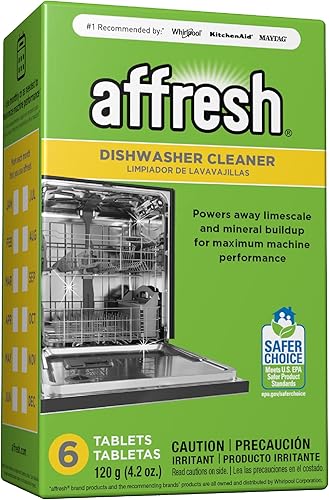
Recommended Tools (Amazon)
Deep cleaning formula for stuck-on food.

View on Amazon


FAQ
Does the dishwasher kill all bacteria?
No — it reduces them significantly, but does not sterilize.
Is dishwasher cleaning safer than handwashing?
In most cases, yes — thanks to hotter water and drying heat.
Can dishwashers spread germs?
Only if filters are dirty or biofilm is present.
Conclusion: A smarter way to think about “clean” dishes
Dishwashers can be powerful allies for kitchen hygiene – but only when we understand their limits and use them intentionally. A high-temperature cycle with proper loading, good detergent, and a well-maintained machine is capable of reducing bacteria and even viruses on dishes to very low levels. That is why certified sanitize cycles exist and why so many studies find better microbial outcomes for machine-washed dishes than for typical handwashing.
On the other hand, a heavily loaded, low-temperature eco cycle in a dirty, never-cleaned dishwasher is more about convenience than food safety. It may still remove visible food soil, but it will not deliver the same hygienic margin of safety – particularly for high-risk items and households.
The practical takeaway is simple:
- Reserve sanitize or hotter cycles for high-risk loads.
- Load dishes so the spray can actually reach every surface.
- Use effective detergent and keep your machine clean inside.
- Remember that “visibly clean” is not always the same as “microbiologically safe”.
When you treat your dishwasher as a science-based tool instead of a black box, it really can help you build a safer, healthier kitchen routine – with less effort and more peace of mind every day.
Scientific references
- NSF International. Dishwasher Certification — Residential Dishwashers (NSF/ANSI 184). Available at: nsf.org
- Kudla M. et al. Hygiene Efficacy of Short Cycles in Domestic Dishwashers. Microorganisms. 2025. Available at: mdpi.com
- Sahai D. et al. Microbiological Assessment of Utensils Cleaned by Domestic Dishwashers. Food Protection Trends. 2015. Available at: foodprotection.org
- Lucassen R. et al. Virucidal Efficacy of Household Dishwashers. Microorganisms. 2021. Available at: mdpi.com
- Zupančič J. et al. The dishwasher rubber seal acts as a reservoir of bacteria in the home environment. BMC Microbiology. 2019. Available at: biomedcentral.com
- Kulesza K. et al. Dishwashers as an Extreme Environment of Potentially Pathogenic Fungi. Pathogens. 2021. Available at: mdpi.com

