The Truth About Aluminum Foil: When It’s Safe — and When It Isn’t
- Introduction: Why Aluminum Foil Gets So Much Attention
- What Aluminum Foil Is & Where You Encounter It
- What Science Says About Aluminum Leaching
- Health Concerns: How Much Aluminum Is Too Much?
- When Aluminum Foil Is Generally Safe to Use
- When You Should Avoid Using Aluminum Foil
- Safer & Smarter Alternatives (With Practical Examples)
- Recommended Kitchen Tools (Amazon Picks)
- FAQ: Common Questions About Aluminum Foil
- Conclusion: Simple Rules for a Safer Kitchen
- Scientific References
Introduction: Why Aluminum Foil Gets So Much Attention
Aluminum foil is one of the most common items in a modern kitchen. We use it to wrap leftovers, line baking trays, grill fish, and even cover casseroles in the oven. It's cheap, convenient, and feels almost invisible in daily cooking — until you start wondering: does aluminum from foil actually get into my food, and should I worry about it?
Over the last decade, several studies have measured how much aluminum moves from foil into food during cooking and storage. Many of them agree on one key point: acidity, salt, temperature, and time all matter. Under certain conditions, aluminum levels in food can rise noticeably.
In this article, we'll walk through:
- How aluminum foil behaves in real cooking conditions;
- What major food safety bodies (EFSA, WHO/JECFA) say about aluminum exposure;
- When foil is reasonably safe and when it's risky;
- Simple alternatives that fit into an everyday kitchen;
- Real-world inspiration from well-known chefs and public guidance.
What Aluminum Foil Is & Where You Encounter It
Aluminum foil is made from nearly pure aluminum rolled into extremely thin sheets. It's:
- lightweight and flexible;
- an excellent heat conductor;
- easy to shape into "bags" or covers for pans;
- often used once, then thrown away.
You'll typically use foil in four ways:
- Oven cooking — covering trays, wrapping potatoes, baking fish or meat "in a bag".
- Grilling — grilling vegetables or fish packets on a barbecue.
- Short-term holding — covering a dish to keep it warm.
- Wrapping leftovers — covering cold food in the fridge or freezer.
What Science Says About Aluminum Leaching
Several experiments have tested how much aluminum moves from foil into food under real cooking conditions. In general, they show:
- Cooking in foil increases aluminum levels in food compared with cooking without foil;
- Acidic foods (tomatoes, citrus, vinegar marinades) and salty dishes extract more aluminum;
- Higher temperature and longer cooking time mean more leaching;
- Thin or low-quality foil may leach more than thick, heavy-duty foil.
One review of aluminum contamination during cooking found that baking meat and vegetables in aluminum foil can increase aluminum content of the finished dish several-fold, especially when acidic ingredients are present. Another paper measuring leaching into tomatoes and leafy vegetables during cooking reported particularly high aluminum levels in those acid-rich foods.
Health Concerns: How Much Aluminum Is Too Much?
Aluminum is not essential for the human body. We are exposed to it from multiple sources: food additives, natural background in food, drinking water, some medicines, and contact materials like foil or cookware.
To evaluate risk, major agencies define a tolerable weekly intake (TWI or PTWI) — a weekly amount that is unlikely to pose health concerns over a lifetime:
- The European Food Safety Authority (EFSA) set a TWI of about 1 mg aluminum per kg body weight per week.
- The Joint FAO/WHO Expert Committee on Food Additives (JECFA) uses a provisional TWI of 2 mg/kg bw/week for aluminum compounds in food.
Most people's average exposure from food is below or around these limits, but for children and high consumers of aluminum-containing additives or heavily wrapped foods, intake may approach or exceed them.
A few important points:
- Aluminum absorption from the gut is low, but the metal can accumulate in bones and some other tissues over time, which is why weekly exposure (rather than daily) is considered.
- Early concerns about a strong link between aluminum exposure and Alzheimer's disease remain controversial; current evidence does not prove a direct causal link from normal dietary exposure.
- Nevertheless, many public-health experts suggest limiting unnecessary aluminum exposure, especially where easy alternatives exist.
When Aluminum Foil Is Generally Safe to Use
Used wisely, aluminum foil can still be part of a healthy kitchen. In many situations, the extra exposure appears modest compared to overall dietary aluminum intake.
1. Short, moderate-heat cooking with non-acidic foods
Examples:
- Covering a casserole dish for the first part of baking;
- Baking plain potatoes at typical oven temperatures;
- Loosely covering a roasting tray to prevent burning.
In these cases, contact time is limited, and the food is usually not highly acidic or extremely salty, so aluminum uptake tends to be lower.
2. As a loose cover, not tightly wrapped around moist food
If foil is used mainly as a "roof" over a pan and does not cling tightly to wet, acidic food surfaces, there is less direct contact and less opportunity for migration.
3. Occasional grilling or baking with heavy-duty foil
Heavy-duty foil is thicker and more robust than very thin foil. When you grill vegetables or bake fish in a foil packet from time to time, especially with mild seasonings rather than acidic marinades, the added aluminum load is likely small compared with overall diet.
Real-life chef example: "fish in a bag" & smart tweaks
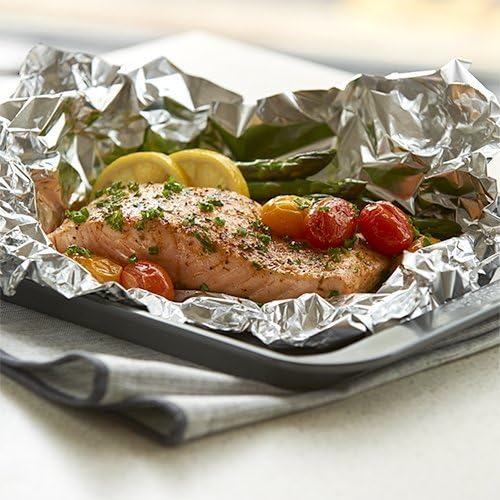
Popular chefs sometimes use foil bags to cook fish with vegetables and herbs. For example, Jamie Oliver's recipes show salmon or white fish baked in a foil parcel as a simple, flavourful method that keeps moisture and aromas inside.
A smart "Healthy Kitchen Magic" adaptation is to:
- place a small sheet of parchment paper between the food and the foil,
- avoid very acidic marinades (heavy tomato, vinegar, lots of lemon) directly against the foil,
- enjoy this style of cooking as an occasional treat, not a daily habit.
When You Should Avoid Using Aluminum Foil
Now the part that really matters for everyday health: when aluminum foil is a poor choice.
1. Cooking acidic foods directly in foil
Studies consistently show higher aluminum migration when foods are acidic (tomato sauce, citrus, wine or vinegar marinades).
High-risk combinations:
- Tomato-based dishes baked long in foil "boats";
- Fish or chicken in lemon juice or vinegar, tightly wrapped in foil;
- Foil-wrapped leftovers with tomato, citrus, or pickled ingredients.
2. Very salty foods baked or grilled in foil
High salt content can also increase aluminum migration from foil into food.
Examples:
- Heavily salted potatoes or vegetables tightly wrapped in foil;
- Marinated meats with lots of soy sauce, salt, or salty rubs.
3. Long-term storage or repeated reheating in foil
Food safety agencies caution that foil is not airtight; wrapped leftovers can dry out and may face higher risk of contamination if not cooled and stored properly.
Better options:
- Cool food quickly and store it in glass or high-quality containers with lids;
- Use foil only for short-term covering or transport, not days of storage.
4. High-heat grilling with thin foil
Very high temperatures, direct flame, and thin foil can accelerate breakdown and leaching. For long barbecue sessions, it's usually safer to rely on stainless-steel grill baskets or cast-iron pans as the main contact surface.
Safer & Smarter Alternatives (With Practical Examples)
The easiest way to lower aluminum exposure is to treat foil as a tool for specific tasks, not a universal solution. Here are practical alternatives you can start using this week.
1. Unbleached parchment paper
Parchment paper lined with food-grade silicone is non-stick, heat resistant, and does not contribute aluminum to food.
Use it for:
- lining baking trays for vegetables and cookies;
- "en papillote" (fish or chicken in parchment packets);
- preventing sticking instead of foil on the pan surface.
2. Glass baking dishes & storage containers
Borosilicate glass dishes are excellent for casseroles, lasagna, roasted vegetables, and leftovers. They don't leach metals, and they're ideal for reheating in the oven or microwave (follow manufacturer guidance).
3. Stainless-steel baking trays & roasting pans
Good stainless steel is durable, stable at high temperature, and reusable for many years. You can line it with parchment paper to reduce sticking and simplify cleanup.
4. Silicone baking mats
Food-grade silicone baking mats are reusable non-stick surfaces that replace many roles of foil in oven baking: they're great for cookies, roasted vegetables, and some savoury dishes when used within temperature limits.
Real-world inspiration: how professionals adapt
Many professional chefs and food writers now emphasize parchment-lined trays, glass storage, and stainless steel as everyday tools. For example, features on batch cooking and chef home kitchens often show trays lined with baking parchment, which simplifies clean-up and reduces contact with metal surfaces.
In other words, even when foil appears in recipes, it tends to be one tool among many — not the default for every task.
Recommended Kitchen Tools (Amazon Picks)
Below are example products you can find on Amazon. Replace foil in high-risk situations with safer options, and choose better foil when you really need it.


FAQ: Common Questions About Aluminum Foil
Current research does not prove that normal use of aluminum foil in cooking directly causes Alzheimer's disease. Some studies explore aluminum's role in the brain, but large authorities focus on overall exposure and set conservative weekly limits rather than banning foil. Still, reducing unnecessary aluminum exposure is a reasonable precaution.
For short, moderate-heat cooking with non-acidic foods, foil is generally considered acceptable. However, cooking acidic or very salty foods tightly wrapped in foil at high temperature for a long time leads to higher aluminum migration. Whenever you can, use parchment, glass, or stainless steel instead.
Foil is not airtight. Food scientists warn that for longer-term storage, foil can allow air and bacteria to reach food and, with acidic dishes, may increase aluminum leaching. For anything beyond short-term holding, it's better to cool food quickly and store it in sealed glass or quality containers.
Occasionally, yes — but avoid very high heat, direct flames for long periods, and acidic marinades in direct contact with foil. A stainless-steel grill basket or cast-iron pan is a safer main surface for frequent grilling.
Use foil less often and replace it in high-risk situations: acidic foods, very salty dishes, long cooking, and storage. Switch to parchment paper, glass bakeware, and glass storage containers as your everyday defaults.
Conclusion: Simple Rules for a Safer Kitchen
Aluminum foil is not "poison", but it's also not invisible. We now know that certain combinations — acid, salt, time, and heat — draw more aluminum into food. At the same time, major food safety agencies view typical exposure as manageable when it stays within conservative weekly limits.
A practical, wellness-focused kitchen doesn't require perfection. It simply asks better questions:
- Do I really need foil here, or would parchment, glass, or stainless steel work just as well?
- Can I keep foil away from long-cooked tomato dishes, citrus, and salty marinades?
- Can I store leftovers in glass instead of wrapping them in foil overnight?
By answering "yes" more often, you automatically lower aluminum exposure, upgrade your food safety, and move your kitchen closer to the Healthy Kitchen Magic ideal: smart, simple, science-aware home cooking.
Scientific References
- Dordevic D. et al. Aluminum contamination of food during culinary preparation. International Journal of Environmental Research and Public Health, 2019.
- Fermo P. et al. Quantification of the Aluminum Content Leached into Foods Baked Using Aluminum Foil. International Journal of Environmental Research and Public Health, 2020.
- Ali H.A.M. Aluminum Leaching during Food Preparation and Storage, 2023.
- EFSA. Aluminium in Food — Q&A. European Food Safety Authority / EUFIC summary, 2021.
- WHO / JECFA. ALUMINIUM — Evaluations of the Joint FAO/WHO Expert Committee on Food Additives. PTWI for aluminium compounds in food.
- Bassioni G. et al. Risk Assessment of Using Aluminum Foil in Food Preparation, 2012.
- Stahl T. et al. Migration of aluminum from food contact materials to food. Environmental Sciences Europe, 2017.
- USDA / Food Safety and Inspection Service (FSIS). Guidance on leftovers, cooling, and storage.
- Jamie Oliver. Salmon in a bag and related "fish in a bag" recipes demonstrating foil parcel cooking.

