Cooking Oils Under Heat: Which Ones Stay Stable and Which Ones Break Down?
Why Heat Changes Oils in the First Place
Cooking oils are mostly made of triglycerides — three fatty acids attached to a glycerol backbone. When you heat them, especially for long periods or to high temperatures, several things start to happen:
- Fatty acids oxidize (react with oxygen), forming peroxides and then secondary oxidation products.
- Double bonds break in polyunsaturated fats, which are more fragile than saturated or monounsaturated fats.
- Volatile compounds form, contributing to flavor but also to smoke and off-odors.
- Repeated heating accelerates polymerization and the formation of polar compounds and trans fats.
Modern analytical work has shown that when common oils like sunflower, soybean, olive and canola are heated for prolonged periods, markers of oxidation and degradation steadily increase, especially in oils rich in polyunsaturated fatty acids.
Smoke Point vs. Oxidative Stability: Not the Same Thing
Many kitchen charts focus on smoke point — the temperature at which an oil visibly smokes. Smoke point is useful, but it is not the full story:
- Smoke point is influenced by free fatty acids and impurities; refining usually raises it.
- Oxidative stability reflects how resistant an oil is to breakdown over time at heat.
Recent controlled experiments and reviews have found that oils with high monounsaturated fat and natural antioxidants, such as olive oil, can remain more stable during heating than more refined seed oils rich in polyunsaturated fats, even when smoke points look similar on paper.
In other words, you cannot judge an oil only by the highest temperature it can reach before visible smoke; you also care about how much damage accumulates inside the oil during everyday cooking.
Fat Types: Saturated, Monounsaturated, Polyunsaturated
To understand which oils stay stable under heat, it helps to zoom out and look at the main fatty acid families:
- Saturated fats (like in coconut oil or ghee) have no double bonds. They are structurally stable and relatively resistant to oxidation under heat.
- Monounsaturated fats (MUFA) (like in olive and high-oleic avocado oils) have one double bond. They are generally quite stable, especially when accompanied by natural antioxidants such as polyphenols.
- Polyunsaturated fats (PUFA) (like in conventional sunflower, soybean and corn oils) have multiple double bonds, which makes them more vulnerable to oxidation and breakdown at high temperatures.
Large reviews of frying and heating experiments consistently show that oils richer in saturated and monounsaturated fats typically generate fewer oxidation products than PUFA-heavy seed oils when both are used for prolonged high-heat cooking.
| Oil type | Typical fatty acid profile | Heat behavior (simplified) |
|---|---|---|
| Extra virgin olive oil | High MUFA, low PUFA, rich in polyphenols | Good stability for sautéing & roasting; antioxidants sacrifice themselves first |
| Refined high-oleic oils (sunflower, canola, avocado) | High MUFA, moderate antioxidants | Suited for higher-heat cooking and occasional frying |
| Coconut oil, ghee | High saturated fat | Very heat-stable, but should be used within overall dietary limits |
| Conventional seed oils (soy, corn, regular sunflower) | High PUFA | More prone to oxidation and off-flavors at prolonged high heat |
How Different Oils Behave Under Heat
Extra Virgin Olive Oil: More Stable Than Many People Think
Extra virgin olive oil (EVOO) is rich in monounsaturated fat and naturally occurring antioxidants, especially phenolic compounds. Several heating studies have shown that EVOO maintains relatively high oxidative stability during roasting and pan cooking, often outperforming PUFA-rich seed oils under the same conditions.
A detailed review of olive oil cooking experiments found that even though some phenolic compounds decrease during heating, olive oil retains a portion of its antioxidant capacity and remains comparatively stable at typical domestic cooking temperatures.
From a broader health perspective, extra virgin olive oil is also a core feature of the Mediterranean diet. In the PREDIMED trial and related analyses, higher EVOO intake was associated with improved cardiovascular outcomes when used as part of a plant-forward dietary pattern.
Refined Olive, Avocado & High-Oleic Oils
Refined olive oil and refined avocado oil have some phenolics removed during processing, but they keep a high proportion of heat-stable monounsaturated fat. Many high-heat avocado oils advertise smoke points around 480–500°F (250–260°C). Laboratory investigations of refined high-oleic seed oils show that they generally hold up better to heat than oils dominated by linoleic acid.
That makes these oils good candidates for:
- High-temperature searing
- Stir-frying
- Occasional shallow or deep frying at home
Coconut Oil, Ghee & Other Saturated-Fat-Rich Options
Coconut oil and traditional clarified butter (ghee) are rich in saturated fats, which resist oxidation under heat. Experimental work on deep-fat frying consistently shows that fats with fewer double bonds degrade more slowly, generating fewer oxidation markers than highly polyunsaturated oils at the same temperature.
From a cardiovascular perspective, diets very high in saturated fat are still linked with different risk profiles than diets built around unsaturated fats, so many nutrition guidelines suggest using these more as specialty fats, not as the only oil in your kitchen.
Conventional Seed Oils: Sunflower, Soybean, Corn & Grapeseed
Many affordable “vegetable oils” are blends rich in linoleic acid, a polyunsaturated omega-6 fatty acid. Under prolonged heat, especially in deep-fat frying or repeated heating, these oils show faster increases in oxidation markers, polymerization and breakdown compared with monounsaturated-rich oils.
That does not mean you can never use them, but it does suggest:
- Avoiding very high & long frying sessions with the same batch of oil.
- Discarding oil that smells rancid, darkens significantly or becomes viscous.
- Favoring oils with more monounsaturated fat for frequent frying at home.
Real-Life Inspiration: How a Chef Thinks About Oils
Many professional chefs routinely mix flavor and stability when they choose fats. For example, British chef Jamie Oliver has written about using milder, more refined olive oils for general high-heat cooking and keeping peppery extra virgin olive oil for finishing dishes, salads and dips where its flavor really shows.
This mirrors what heating studies suggest: use stable oils for the heavy lifting on the stove, and let your most aromatic, antioxidant-rich oils shine at the table.
Matching Oils to Cooking Methods
Best Choices for High-Heat Cooking (Stir-Fry, Searing, Wok Work)
- Refined avocado oil
- Refined olive oil or light-tasting olive oil
- High-oleic sunflower or canola oil (when available)
- Coconut oil or ghee (in moderate overall dietary amounts)
These options offer a good balance between heat stability and practical cooking performance.
Best Choices for Medium Heat (Daily Sautéing, Oven Roasting)
- Extra virgin olive oil
- Regular avocado oil
- Blends with a high monounsaturated content
At typical domestic roasting temperatures, monounsaturated-rich oils have shown favorable stability profiles compared with PUFA-dense seed oils.
Best Choices for Low Heat & Raw Uses
- Extra virgin olive oil for salads, dips and drizzling
- Nut and seed oils (like walnut or flax) used cold, not for frying
- Delicate specialty oils where flavor is more important than heat tolerance
Simple Rules to Reduce Oil Damage in a Real Kitchen
Even the most heat-stable oil can be mistreated. These evidence-aligned habits make a difference:
- Avoid chronic overheating. If your oil is smoking aggressively, it is breaking down more quickly.
- Do not reuse frying oil many times. Repeated deep-frying cycles increase oxidation products and trans fats.
- Store oils in cool, dark places. Light and heat promote oxidation, even outside the pan.
- Buy reasonable sizes. A huge bottle that sits opened for months may oxidize before you finish it.
Helpful Tools That Make Cooking with Oils Safer & Easier
Recommended Kitchen Essentials
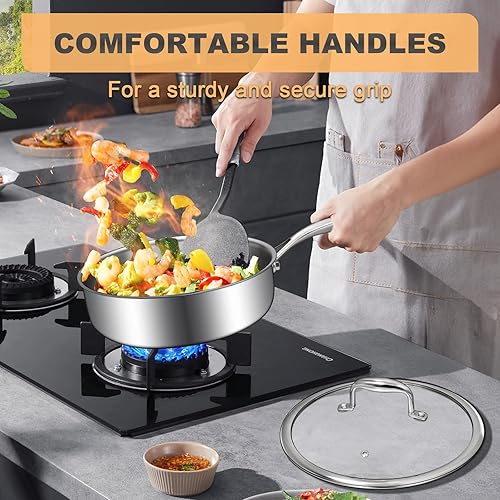
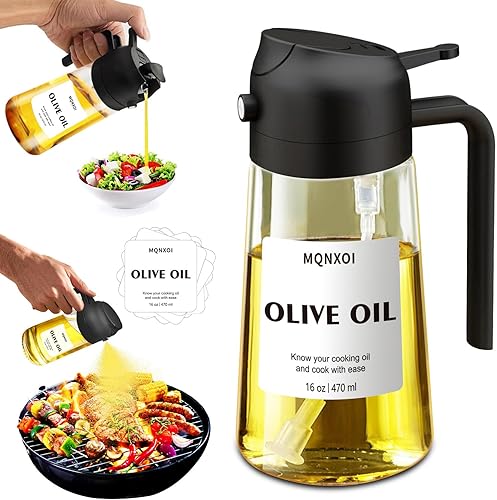
These products illustrate how you can match good oils with good tools. Links go to Amazon and may include an affiliate tag.


Conclusion
No single oil is perfect for every purpose. Under heat, oils behave according to their fatty acid structure and antioxidant content, not just the number printed on a smoke-point chart. Monounsaturated-rich oils like olive and avocado, especially when not abused at extreme temperatures for long periods, tend to offer a good balance between stability and overall health profile. Saturated-fat-rich fats like coconut oil and ghee are highly heat-stable but should fit into your broader dietary goals.
Highly polyunsaturated seed oils remain widely used, but research on frying and thermal oxidation suggests that they degrade faster and generate more oxidation products under prolonged frying conditions. For most home cooks, a practical and science-aligned strategy is simple: use stable oils for high-heat work, enjoy fragrant extra virgin olive oil for lower-heat cooking and finishing, avoid reusing frying oil repeatedly, and store all oils away from heat and light.
When your choice of oil is intentional, your kitchen can stay both flavorful and aligned with what current research suggests about heat, oxidation and long-term health.
Scientific References
- Tsai YH, et al. Thermal Degradation of Vegetable Oils. Foods. 2023;12(8):1609. Available from: https://www.ncbi.nlm.nih.gov/pmc/articles/PMC10178358/
- Ramroudi F, et al. Investigation of the Physicochemical Properties of Vegetable Oils and Their Blends. Foods. 2022;11(7):1005. Available from: https://www.ncbi.nlm.nih.gov/pmc/articles/PMC8986445/
- Abrante-Pascual S, et al. Vegetable Oils and Their Use for Frying: A Review of Frying Performance and Nutritional Quality. Foods. 2024;13(24):4186. Available from: https://www.mdpi.com/2304-8158/13/24/4186
- Ambra R, et al. A Review of the Effects of Olive Oil-Cooking on Phenolic Compounds and Antioxidant Capacity. Foods. 2022;11(3):382. Available from: https://www.ncbi.nlm.nih.gov/pmc/articles/PMC8838846/
- Valle C, et al. Deep-frying Impact on Food and Oil Chemical Composition. Food Science & Nutrition. 2024. Available from: https://onlinelibrary.wiley.com/doi/10.1002/fsh3.12056
- Falade AO, et al. Potential Health Implications of the Consumption of Thermally Oxidized Oils and Fats. Polish Journal of Food and Nutrition Sciences. 2017;67(2):95–105. Available from: https://journal.pan.olsztyn.pl/pdf-98482-31245
- Loganathan R, et al. A Review on Lipid Oxidation in Edible Oils. Malaysian Journal of Analytical Sciences. 2022;26(6):1000–1019. Available from: https://mjas.analis.com.my/mjas/v26_n6/pdf/Loganathan_26_6_17.pdf
- Estruch R, et al. Primary Prevention of Cardiovascular Disease with a Mediterranean Diet Supplemented with Extra-Virgin Olive Oil or Nuts. N Engl J Med. 2018;378: e34. Available from: https://pubmed.ncbi.nlm.nih.gov/29897866/
Disclaimer: This article is for informational purposes only and does not provide medical or nutritional advice. Always consult your doctor or a qualified dietitian about your individual situation. We do not accept any responsibility for possible consequences of using this information.

